← Back to Blame-likes Compendium
Lorn's Lure by Rubeki Games is a blame-like that does something most entries in this compendium don't even attempt: it makes the megastructure climbable. You play an android chasing a visual glitch through a vast, decaying structure, armed with a pair of pickaxes and a jump that feels just barely sufficient for what the game asks of you.
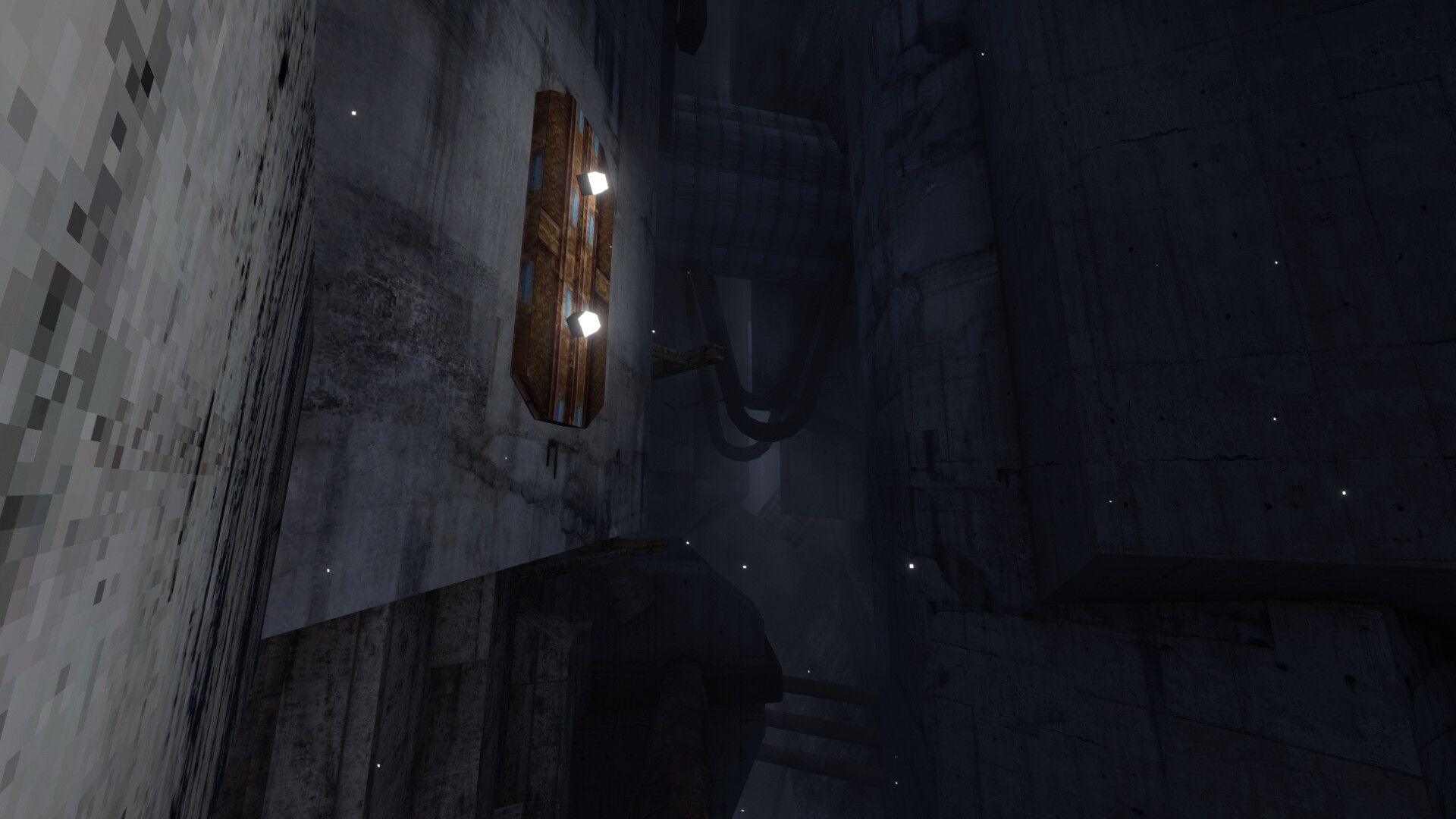
The climbing system is the standout mechanic. Rather than predetermined ledges or scripted parkour sequences, you can dig your picks into almost any vertical surface and haul yourself up. It turns the architecture from backdrop into terrain—every wall becomes a potential route, every overhang a decision point. The result is a relationship with the structure that blame-likes rarely achieve: you're not just walking through it, you're physically grappling with it. The megastructure resists you in a way that feels material rather than abstract.
Visually, Lorn's Lure goes for a deliberately low-fi PS1-era pixel aesthetic. Textures are chunky and dithered, geometry is sharp-edged, and the palette leans into rusted oranges and concrete greys. It shouldn't work as well as it does. The low resolution actually amplifies the sense of scale—when you look down a shaft and the walls dissolve into pixel fog, your brain fills in the depth. It's the same trick Nihei's linework pulls in BLAME!, where what you can't quite see feels bigger than what you can.
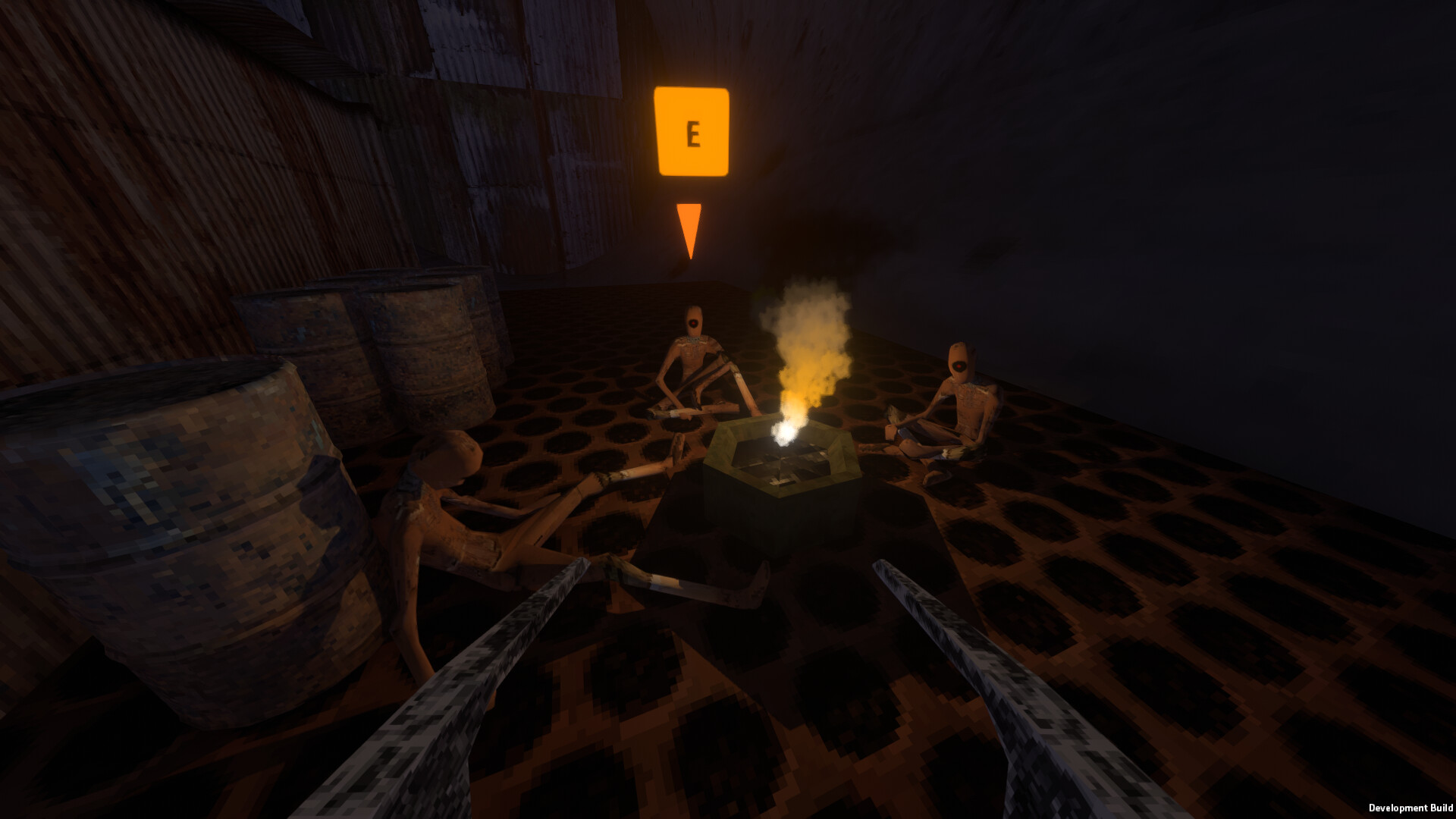
Scattered throughout the structure are small pockets of life—androids huddled around fires, remnants of habitation wedged into corners of something that was never meant to be lived in. These moments echo the villages Killy stumbles across in BLAME!, fragile communities surviving in the gaps of a system that has forgotten them. The game threads a narrative about existentialism, depression, and war through these encounters and environmental details, though it wisely keeps it sparse enough that you're doing most of the interpretive work yourself.
The difficulty is real. Some platforming sections demand precise timing and spatial awareness that can feel punishing, especially when the camera and the low-fi visuals conspire to obscure exactly where a surface ends. The die-and-retry loops can break the exploratory flow, same as NaissanceE's platforming stumbles. But where NaissanceE's jumps feel like an intrusion into a contemplative game, Lorn's Lure builds its identity around the physical struggle. Falling isn't a failure of game design—it's the structure reminding you that you're small and it doesn't care.
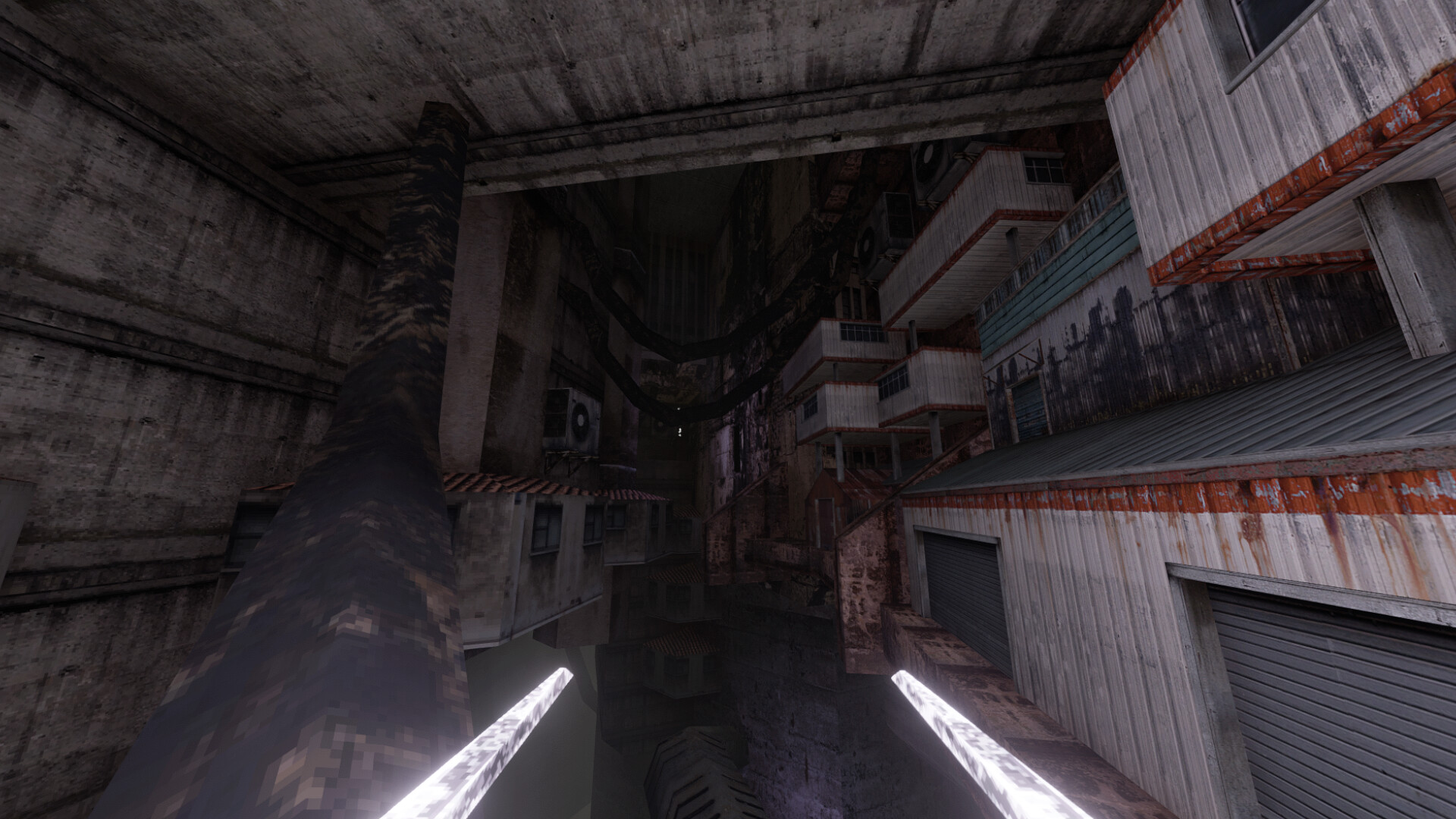
As a blame-like, Lorn's Lure earns its place through sheer verticality. The structure is layered, rusted, industrial, and incomprehensibly deep. Pipes snake between concrete slabs, corridors open into shafts that drop beyond visibility, and everything carries the weight of time and purposelessness. The android protagonist adds a layer that fits the BLAME! template well—you're not human, and the structure wasn't built for you either, but you climb anyway because the alternative is standing still.
It's not a long game, but longer than most on the list and the parkour map pack DLC and the structure's branching routes give it legs beyond a single playthrough.